Showing posts with label pasta. Show all posts

Tuesday, 20 November 2012

Bacon, broad bean and black garlic pasta

I call this 3B pasta and it's really easy to make although it does use three pans. I think it's worth it, though, as the flavours go so well together. It's a store-cupboard dish - I usually have all the ingredients to hand so it's just a case of raiding the fridge and freezer for bacon, broad beans and parmesan, and the larder for pasta and the garlic.

What you need: 
Enough dried pasta spirals for one
A small shallot, chopped very finely
A small pack of lardons or a couple of snipped bacon rashers
A handful of broad beans
A bulb of black garlic
Olive oil
Fresh grated parmesan
A knob of butter

What to do:
Peel the garlic and crush the cloves to a paste in a mortar and pestle. Pour in about 3 tablespoons of olive oil, add a pinch of sea salt and work them together to create a dark flavoured oil. (One of those mini worktop food-processors will do an equally good job of blitzing everything together.)

Put the pasta on to cook and the broad beans. While they are boiling, sauté the the shallot in a knob of butter until it turns translucent, then add the lardons and fry until the fat starts to run off. Don't let them caramelise. Keep warm. Drain the beans (about 5 minutes) and pop them out of their skins then add them to the lardons. Drain the pasta when it's al dente (about 10 minutes) and add to the beans and lardons. Mix well, add a tablespoon of the black garlic oil, toss through and put in a bowl. Finish off with some grated parmesan.

Cook's tips: 
Black garlic is ordinary garlic that has been fermented - it has a deep, sweet flavour a little like licorice and is very soft. As a flavouring, it's not obviously garlicky at all but it will deliver a huge hit of umami to whatever you add it too. It's quite easy to find it online and a single bulb usually costs £1-1.50. Peel the cloves carefully with your fingers as they will be sticky and squishy.

The leftover oil will keep in a jar for weeks - try adding some to a mushroom risotto, dress a lamb chop with it before grilling or rub it over a chicken prior to roasting. On their own the cloves can be used to flavour dips, add to tapenade, or use in Asian stir-fries.

Much as I love broad beans, I find the skins can be tough sometimes. I won't skin the beans if they are very small but the bigger ones definitely benefit from losing their outer coat. If the beans have been boiled for 4-5 minutes, the skins will slip off very easily. If you're not a fan, use peas instead.

Thursday, 18 October 2012

Orzo risotto with porcini

Orzo is a kind of pasta that looks like tiny grains of rice - it's often used to bulk out soups (it works well in minestrone, for example) or make the base of a salad. It's rare to see it in supermarkets, but if you find a bag somewhere grab it as it's a versatile store-cupboard staple and a 500g pack will last for ages. I found my most recent bag in a discount supermarket some months ago and paid about £1.20.

Because orzo looks like rice, it's a good substitute for it in some dishes and it makes a great "risotto". It takes about half the time to cook, so you don't want the pasta in the pan for more than about 10 minutes.

What you need:
Orzo, about half a mug full
Small handful of dried porcini
4-5 sundried tomatoes
1/2 litre of stock
1 small onion, finely chopped
Olive oil
Seasoning
Parmesan cheese

What to do: 
Using separate bowls, soak the porcini and tomatoes by covering with boiling water and leaving for 15-20 minutes (or according to packet instructions). Drain, reserving the liquid. Make up the liquid to the right amount by topping up with boiling water and adding in a little stock powder if you wish. Chop the sundried tomatoes into small pieces.

Sauté the onion in the olive oil until it's soft and translucent, using a heavy-based sauteuse over a medium heat. Toss in the orzo, stir through until it's coated in oil (as you would for a rice risotto), then pour in about half the liquid. Bring the pan almost to the boil then turn the heat right down so everything's on a gentle simmer.

Stir the risotto and add the tomatoes and porcini after 5 minutes. Stir again and add more liquid if it starts to dry out. The orzo should cook within 10 minutes but check it - it needs to be al dente, not mushy. Stir in some grated parmesan, season to taste and dish up.

Cook's tips:
Be really careful with the cooking time. Risotto rice needs 20-25 minutes, orzo much less, so get all your ingredients ready before you switch the hob on. Orzo also needs a lot less liquid than rice as it is much less absorbent, so you need to watch how much you add and only top up it little by little.

Friday, 28 September 2012

Eating my way through Sicily

One of the pleasures of foreign travel is being able to try different foods - if I'm honest, it's one of the main attractions, more interesting than lying on a beach for a week or two. I've been known to dash off for short breaks purely for the food, but longer trips really give you plenty of time to eat your way round a cuisine.

I've been to Italy many times, but not Sicily until now. I was itching to climb Etna but had to read up on the food culture before I flew out. No surprise to learn that pasta and pizza are as widespread in Sicily as the rest of the country, but there are lots of local specialities too.

I was based in the east, where fish dominates the menus, thanks to the thriving fishing industry and abundance of varieties. At Catania's massive outdoor fish market, a daily theatrical spectacle, I saw hundreds of fishy things I'd never seen before.

With so much fish on menus everywhere I ate very little meat. Stuffing and rolling fillets is a local speciality. The sarde a beccafico (sardines stuffed with pine nuts, capers, breadcrumbs and almonds) were delicious, as was the swordfish (involtino di pesce spada) stuffed with anchovies, garlic and salted ricotta (and an unexpected but very tasty side of deep-fried celery leaves).

Sampling the pasta all Norma was a given - a plate of pasta, tomatoes, fried aubergine slices and salted ricotta, named after the opera by Bellini, who happens to be Catania's most famous son. I also enjoyed this plate of pasta with tomato sauce, peas, fresh anchovies and fried breadcrumbs (which are another local tradition).
And this is what I call a proper rocket pizza.
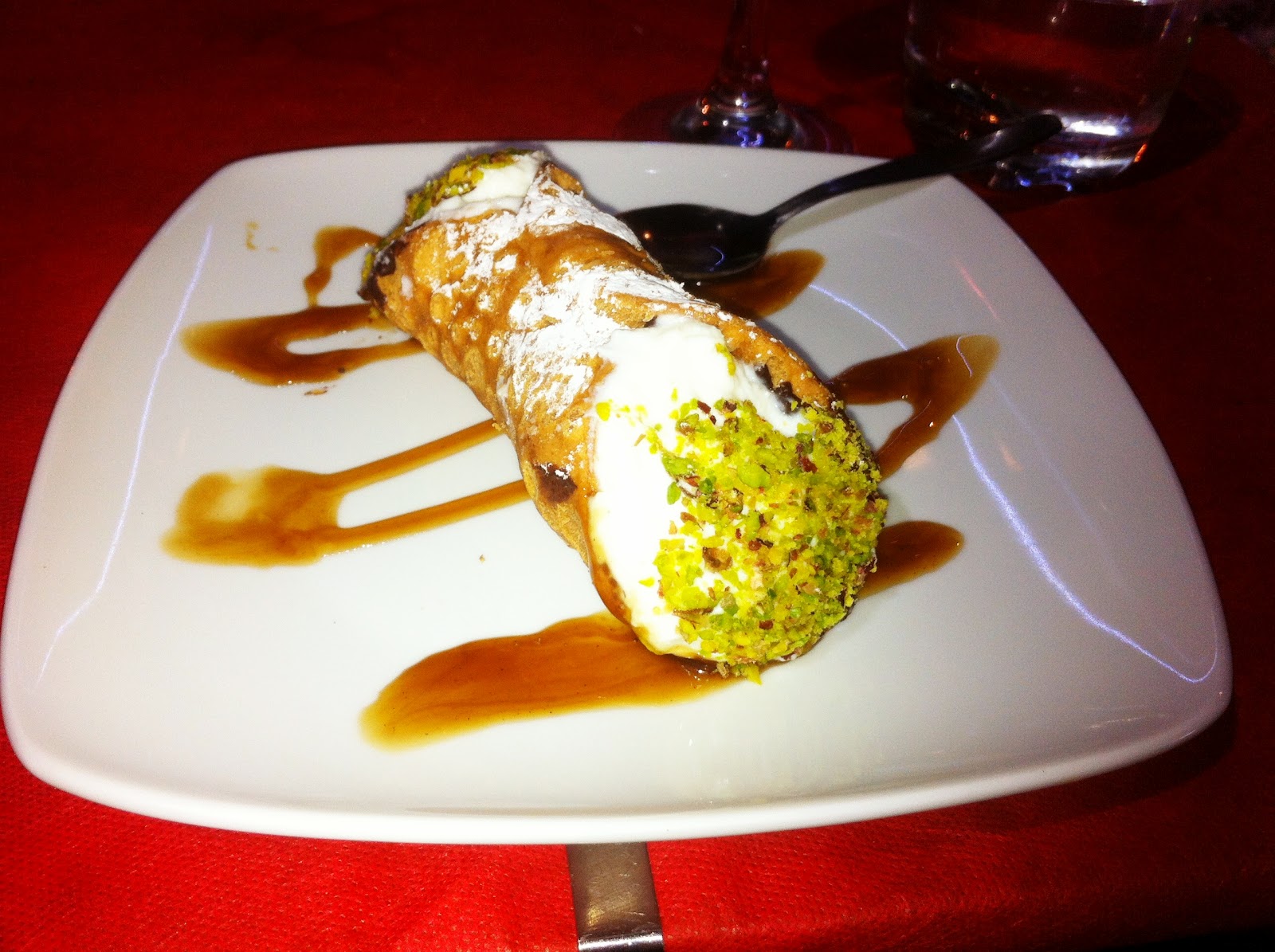
The desserts also delighted. Annoyingly, my every attempt to try the cassata was thwarted - time and again I was told sorry, it's off the menu. But I did scoff a few cannoli - deep-fried rolled pastry shells (a bit like a brandy snap), stuffed with fresh, sweetened ricotta and candied fruits then dipped in crushed pistachios. And the semifreddo of pistachio, marsala-soaked sponge and soft meringue was amazing.
There were many more memorable meals, too many to post here. Naturally I came home with food - a large hunk of salted ricotta, a lump of coppa, a jar of pistachio cream, bottles of limoncello and fennel liqueur, and a basket of these beautiful marzipan fruits...
Lastly, I've just found this lovely blog on Sicilian food and I'm enjoying dipping into the recipes and learning even more about the food culture there.

Thursday, 28 June 2012

Chocolate chilli macaroni cheese

My last #foodiepenpals parcel contained a box of chocolate pasta. I was intrigued enough to do some research into the kind of dishes people usually make with it. I've used flavoured pasta before - squid ink, tomato, basil, etc - but I could see the possibility here to go two ways. Sweet or savoury.

I ended up bookmarking a few recipes to try later but as Ruth, my parcel donor, has also included a packet of pasilla chillies it seemed to logical to use them together - there's a long culinary history of using chilli and chocolate together, or even just chocolate with savoury dishes generally (the Mexican chicken in chocolate sauce I once ate in Antwerp was pretty memorable, for all the right reasons).
In the end, I decided to reinvent an old favourite. For who can resist macaroni cheese, one of the ultimate comfort foods? I wouldn't normally eat it at this time of year but the weather's been iffy enough for nippy evenings. I've used all the regular add-ons I throw into mac cheese - the challenge was to see if they were a good match for my parcel ingredients. They do - both the chocolate and the pasilla bring subtly exotic notes to the macaroni cheese, adding a pleasing extra dimension to it without overpowering it. You can taste all the different ingredients.

What you need: 
100g chocolate macaroni
1 pasilla chilli
150g lardons
1 small onion, finely chopped
100g cheddar cheese, grated
About 200g crème fraiche
Butter
Seasoning

What to do: 
Soak the chilli in hot water until it's soft, about 10-15 minutes. Boil the pasta for 8-10 minutes until it's al dente, drain and set aside.

While the pasta is cooking, make the sauce. Sauté the onion gently in a small knob of butter until it's soft and transparent. Add the lardons and fry until cooked. Chop the pasilla finely and add to the pan then stir in the crème fraiche. Mix well. Add about two-thirds of the cheese and stir again. Season to taste.

Tip the macaroni into a small ovenproof dish, pour over the sauce and stir it through. Top with the rest of the cheese and bake at 180C for about 30 minutes until the top is golden, crispy and bubbling.

Cook's tips: 
The pasilla packaging warned it was hot, hotter than chipotle, so I was wary at first. On cutting open the rehydrated chilli I was shocked at the number of seeds inside and left them aside. On tasting the fruit, though, I discovered it's not so hot after all - all the seeds went into the sauce. If you want heat, add some fresh chilli but tread carefully.

I rarely bother to make a bechamel sauce for pasta. It's just extra carbs - crème fraiche alone works just as well to coat the macaroni in creaminess, even the low fat version I usually buy. The cheese also helps make the bechamel redundant.

Be sure to use a decent cheddar with a robust flavour. Anything like a mild Cheshire or Wensleydale will get lost among the competing ingredients.

Larder larks no. 3

My #foodiepenpals parcel arrived mid-month and I can only say that I was overjoyed at the contents. Ruth, my benefactor, really pulled out all the stops to send me a truly exciting and inspiring box of goodies in the midst of a double house move.
Inside was a good mix of treats and snacks plus what I love to experiment with - ingredients! I wasn't disappointed with the latter and indeed went rushing off to research some of the more unusual items.

Among the treats and snacks were a packet of mini grissini - perfect for the solo snacker parked on the sofa in front of the TV, a tasty raw fruit bar that was free of all the usual additives (and I really like that the company supports some very worthwhile charities), a packet of organic instant miso soup - one of those items it's really handy to have in the larder, and a tiny pot of Barnet honey, local to the north London district. With spectacular timing, Ruth had also popped in a small pot of garam masala - mine had just run out so I was happy with that.

Perhaps the most unusual snack (in the long red packet) was the Iranian fruit roll - a long thin strip of pressed apple and barberry. I had to look up the barberry fruit as I'd not heard of it. The strips were encased in plastic film, which took some prising off and then, time to taste! The texture was very chewy, not unlike liquorice, and the fruitiness was intense, with a short burst of sweetness and a tarter after-taste lingering on the palate that pleased me as I don't have a hugely sweet tooth. Thumbs up. I have an Iranian deli near to me so that's something I'll look out for.

I use chipotle chillis quite a lot, as I prefer their smoky flavour to the searing heat of fresh varieties, so I was delighted to find a pack in the box. On closer inspection, they were not chipotles at all but a variety of dried chilli called pasilla. This is also smoked when dried but is much hotter than chipotle and the pack comes with a warning to wear gloves when preparing them.

I was also very excited to receive a packet of artisan pasta produced in the oldest traditional manner - with an unusual twist. It was flavoured with cocoa (at nearly 10% of the ingredient list). There was a recipe on the box for a sauce made with mascarpone, parmesan, pine nuts and parsley - almost a pesto - but I've been experimenting...

Here's my twist on a much-loved favourite.

Tuesday, 19 June 2012

Prawn and asparagus tagliatelle

The asparagus season is woefully short so I practically live off it at this time of year. You can, of course, buy it all year round if you're happy to pay supermarket prices for imported spears. I think British asparagus tastes better though and I prefer to shop local (we all need to watch our food miles, in my view) and in season. And anyway, if you can buy it all year round there's nothing to look forward to. (Parsnips in summer are just plain wrong, too.)

This is a lovely summery dish that can be rustled up really quickly - 15-20 minutes if you prep in the right order. As ever, adjust the quantity to suit your hunger level.

What you need: 
150g cooked and peeled king prawns
4-6 asparagus spears
125g fresh tagliatelle
1 small shallot, finely chopped
Creme fraiche
Vermouth
Seasoning
Parmesan cheese

What to do: 
Cook the asparagus for about 6 minutes in lightly boiling water. Melt a small knob of butter in a pan over a moderate heat and sauté the shallot until it's transparent and soft.

Get the pasta water on to boil. Drain the asparagus and slice the stems into 3cm lengths. Deglaze the shallots in the pan with the tiniest splash of vermouth, toss in the prawns and asparagus plus two generous spoonfuls of crème fraiche. Stir everything through and season to taste.

Cook the tagliatelle at a fierce boil for 3 minutes - it should be al dente. Drain well and tip onto a plate. Spoon over the sauce and finish with a few Parmesan shavings.

Cook's tips: 
First, boil a kettle. Twice. It's the quickest way to get things simmering on the hob and in a recipe where you have two pans that need boiling water, boil the kettle for the asparagus, use what you need then top the kettle up from the tap and boil again for the pasta.

Timing is everything but it's better to have the prawns and asparagus ready first - they'll be fine keeping warm on the hob on the lowest heat - use a diffuser if you need one. Prep the shallot first before you do anything else and the rest should flow easily.

Asparagus doesn't need much prepping - just snap the ends of the stems off at the point between tenderness and woodiness, usually the last inch or so.

Sunday, 4 September 2011

10-minute tortelloni with smoked salmon and rocket

I don't eat a lot of pasta but I do buy fresh tortelloni and ravioli. They are the only sort worth buying fresh because, frankly, it's not worth making your own stuffed pasta when there's only one of you and fresh tagliatelle etc go from raw to mush very quickly during cooking and it's hard to catch them at the al dente stage. I keep dried lasagne sheets and fusilli in my larder and that's the lot. Stuffed fresh pasta also freezes very well. Sainsbury's is also the only supermarket that does one-person portions of stuffed pasta in both meat and veggie varieties - yay! Whenever I do an online grocery shop, I always order two or three packs.


So, I cheat on the pasta but I always make my own sauces. For tomato-based sauces, I cook a big panful then freeze portions - more on that another time. Tonight, I made a very simple sauce that also used up lots of leftovers in my fridge.

What you need: 
Pack of tortelloni
Half a bag of rocket (or two fistfuls if you bought it loose)
About 70g smoked salmon, cut into strips
Crème fraîche
Black pepper, to taste


What to do:
Put a big pan of water on to boil, add a pinch of sea salt then when the water reaches a vigorous rolling boil, throw in your tortelloni - mine was stuffed with spinach and ricotta. Boil for around 5 minutes, then drain and return to the hot pan. Add a very generous tablespoonful of half-fat crème fraîche, the rocket and the smoked salmon. Grind some black pepper over it then stir everything through gently. The rocket should wilt in the heat to about a half its volume. Tip into a bowl and eat. I had a small salad on the side too, which meant I had three, possibly even four, of my five a day in one meal and barely noticed it.


Fridge staples: 
Crème fraîche: I always keep a pot of this in my fridge as it's so useful. The full-fat variety is calorie-laden but half-fat crème fraîche still gives the flavour and mouth feel. It's a great standby for lots of recipes that require cream of some sort. If you don't want to use crème fraîche then try 0%-fat Greek yoghurt (Total does a really good one), which still has a good, thick, creamy texture.

Rocket: I buy the ready-washed bags but I recommend giving it a quick rinse in a colander anyway. You can use it as a salad, for the green stuff in a sandwich or in hot dishes as an extra veg portion.

Smoked salmon: I love smoked salmon but it can be expensive. It's less of a pricey treat if you look out for 3-for-2 or 3 for £10 offers in the supermarkets - it freezes well so you can chuck the extra packs straight in the freezer and defrost in the fridge when you need (or want) them. A 120g pack of supermarket own brand normally costs around £4 so three for a tenner is good value. Half the pack is enough for this pasta recipe. Use the rest for a lunchtime sandwich or for a Sunday brunch with scrambled eggs (once the pack is opened it will keep for up to a week if you seal it carefully).