Showing posts with label rice. Show all posts

Wednesday, 25 September 2013

Pork and coriander rissoles with sticky coconut rice

These rissoles are really easy to make and have a lovely, light flavour from the coriander and lemon. This amount makes 4 to 6 patties, depending how big you make them and how hungry you are.

What you need:
500g pork mince
1 shallot
2-3 cloves of garlic
handful fresh coriander leaves
zest of a lemon
seasoning

For the rice:
50g basmati rice
50ml slightly sweetened coconut water

What to do:
Blitz the shallot, coriander and garlic in a food processor or chop very, very finely. Put into a mixing bowl with the pork mince, lemon zest and seasoning, then work it all together. Shape into burger patties and chill in the fridge for at least 30 minutes. To cook, fry them in a little vegetable oil for about 6 minutes on each side.

To make the rice, put the basmati is a sieve and rinse well under the cold tap until the water runs clear. Put in a pan and add the coconut water. Bring it to the boil, then put a tight lid on it and turn the heat right down until is just simmering. It should take about 12 minutes for all the liquid to be absorbed and for the rice to be plump and sticky.
Cook's tips:
Uncooked rissoles can be frozen - wrap well in cling film, separately, then pop them in a container or freezer bag. They need to be thoroughly defrosted before cooking.

Coconut water is widely available now. Most supermarkets stock it and you can also find it in Asian grocery stores and health food shops. I like the plain version to drink but the slightly sweetened variety, which often has coconut shreds in it, is my preference for the rice. Add a small pinch of sugar to the coconut water if you only have the unsweetened sort. If you can't find coconut water, a mix of about 30ml low-fat coconut milk and 20 ml water works well.

It's a good idea to start the rice before you start frying the rissoles - it needs time to come to the boil and if it's ready before the rissoles, just take it off the heat and leave the lid on to keep it hot until you're ready to plate up. 

Friday, 24 May 2013

Spicy stir-fried rice

It's quite hard to cook one portion of rice for a meal and it hardly seems worth it - cooking two portions so you have leftovers is much smarter. And leftover rice is the basis of a plate of stir-fried rice - the secret to making it properly is to use cooked rice that has been chilled as when it's straight out of the cooking pan it's too warm and damp to get a good result.

This dish doesn't have to be Chinese in style - I don't own a wok and if I'm going to scramble an egg it'll be for my breakfast rather than for this. I take my inspiration instead from spicy rice dishes such as nasi goreng or kedgeree. As well as using up rice, I take the opportunity to clear out my fridge to use up some veg. Then all I need is some spice paste of some sort.

This is quick - just 5 minutes to prepare and 5-10 in the pan.

What you need: 
1 portion of leftover cooked rice, chilled
1 small chicken fillet, cut into bite-size pieces
2 spring onions, sliced 
1 small carrot, cut into julienne strips
A handful of peas
Oil
Curry paste of some sort, about a tablespoon
1 egg (optional)

What to do:
Prepare the veg and chicken. Heat about 2tbsp vegetable oil in a wok or sauteuse and get it very hot. Toss in the chicken and stir-fry it for 4-5 minutes then add all the veg and fry for another 2 minutes. Stir in a generous tablespoon of curry paste and fry for another minute. Lastly, add the rice - break up any lumps and fry it for a good 3-4 minutes so it's thoroughly reheated and all the chicken pieces and veg are evenly distributed through it.

If you're very hungry, top it with a fried egg Indonesian style - well-cooked rather than soft.

Cook's tips:
The chicken doesn't have to be fresh - frying off some leftover cooked chicken or diced lamb works fine, or use cooked prawns. Likewise, the veg are flexible - use diced pepper, sweetcorn, mushrooms or edamame beans, whatever you have to hand.

Cooked rice needs to be handled with care as it's possible to get bacillus cereus food poisoning from it. Chill it quickly after cooking, put it in a bowl and store it in the fridge. And be sure to reheat it thoroughly to kill off any toxins.

Which curry paste? If you're using an Indian one, go for mild rather than fiercely hot. I made this one with some rending paste. If you can find it, nasi goreng paste is the clear winner, but Thai curry paste also works - I use less than a tablespoon of the red sort and avoid the searing heat of the green.

Sunday, 20 January 2013

Smoked haddock and spring onion risotto

I'm back on the comfort food now the snow has arrived. Great steaming-hot piles of carbs help keep the cold out. My slow cooker has been hauled out of the cupboard to braise lamb shanks and oxtails to be accompanied by heaps of mash, a baked potato or chunks of crusty bread to mop up the gravy.

I also want rice and in this weather that means risotto. And I want fish too - the smoked haddock here produces a sunny yellow that lifts the spirits as the snowflakes drift past my windows.

What you need:
1 fillet smoked haddock
1/2 mug of risotto rice
1 small onion, finely chopped
Vegetable oil
Knob of butter
1/2 litre (1 pint) vegetable stock
2 spring onions, sliced diagonally into 1/2cm pieces
Chopped fresh dill
A little grated Gruyère or Emmenthal

What to do:
Heat the oil and butter in a sauteuse over a medium heat and fry the onion until it's soft and translucent. Add the rice and stir it through so every grain gets coated in the fat. Pour in a little stock and stir well, turning up the heat so it stays on a simmer.

Simmer the fish in a little water until it's just cooked, around 4-5 minutes. Lift it out, break it into large flakes with a fork and set it aside. Add the water to the rice, then keep ladling the stock into the rice and stirring until almost all the liquid has been absorbed and the rice is just turning from al dente. Add the smoked haddock and spring onion and grind in a little black pepper. As soon as the stock is absorbed stir in the cheese and dill and dish up.

Cook's tips:
I've discussed the difference between dyed and undyed smoked haddock before. You won't get the lovely bright yellow colour if you use undyed fish - the colour leaches into the cooking water and the rice takes on the yellow when you add the water to it. Tastewise there is no difference.

I don't bother to add salt as smoked haddock can be salty and there will also be salt in the stock. But, as always, check the seasoning before you dish up and add it if you need it.

Don't use parmesan, the traditional risotto cheese, for this, as the fish will overpower its flavour. I like the Swiss cheese as it adds a nice stringy texture as it melts and it's just strong enough to balance the fish. A medium strong cheddar also works well.

Thursday, 5 April 2012

Chorizo meatballs with roasted tomatoes and wild rice

What's not to like about meatballs? They are so versatile - they go brilliantly with pasta and sauce, are delicious with mash and gravy and add meaty goodness to a soup. If you make your own you can use whatever you like in them - beef, lamb and pork, even chicken (delicious in Asian soups or noodle-based dishes). They are also very easy to make, but because of the quantities you need it's hard to make a tiny batch - better to just go with the flow and freeze the excess for another day.

This makes enough for 12 meatballs - 2 portions.

What you need: 
250g minced pork
About 30g chorizo sausage, finely diced
Fresh breadcrumbs
5 cloves of garlic
1/4tsp each of smoked paprika, cumin, chilli powder (chipotle)
Tomato purée
A pinch of dried oregano
1 tsp each fresh chopped parsley, coriander
Pinch of salt
About 50g wild rice
Cherry tomatoes

What to do:
Put the pork mince in a mixing bowl and add the salt, chorizo, 1 clove of very finely crushed garlic, spices and herbs plus about a tablespoon of tomato purée. Mix everything well together then add enough fresh breadcrumbs to bind everything together. Shape into 12 small meatballs and chill in the fridge for at least half an hour.

Bring a pan of unsalted water to the boil and add the wild rice. Once the water returns to the boil, turn it down to a simmer and cook for about 45 minutes.

Put the tomatoes into an ovenproof dish with 4 unpeeled cloves of garlic. Drizzle well with olive and season with sea salt and a little freshly ground black pepper. Bake in the oven at 200C for 30 minutes.

To cook the meatballs, heat some oil in a heavy frying pan or sauteuse and fry gently for around 10-12 minutes, turning regularly so they brown all over. Alternatively you can put them on a baking tray or in a shallow roasting tin and bake them for about 25 minutes in the oven (180C), turning them once.

Put the meatballs and tomatoes on a bed of rice and  drizzle over the juices from the dish you cooked the tomatoes in.

Cook's tips:
Add the breadcrumbs gradually - too much too soon and the mixture will be too dry and won't form meatballs properly. If this happens, add a little cold water to the mix.

To freeze the spare meatballs, put them on a plate or small tray first so they don't stick together. When they have frozen pop them into a freezer bag. Defrost overnight in the fridge.

The meatballs go well with rice and some seasonal veg. Alternatively, heat them through in some tomato sauce and serve on a bed of tagliatelle.

Wild rice isn't actually a rice but wild grass seeds. It needs a lot of cooking, like brown rice, and has a deep nutty taste. You should be able to find it in most supermarkets as well as specialist shops.

Thursday, 22 March 2012

Beetroot and broad bean risotto

Risotto is my go-to comfort food when I need something soothing and creamy and I have two standby favourites - my chicken and pea risotto and a broad bean and bacon recipe, which I think I borrowed from Nigel Slater back in the mists of time. But once in a while I'll ring the changes and shuffle the ingredients around. Springtime offers endless possibilities, with all the lovely new vegetables coming into season. Earlier this week, I came home from the market laden with tiny haricots verts, young turnips and beetroots, purple sprouting broccoli, a bunch of asparagus, two globe artichokes (the first I've seen this year) and fresh garlic.

Wednesday's supper was going to be based around the purple sprouting - it's one of my favourite vegetables and only in season for a very short time so I tend to eat a lot of it when it's around. But then there was a change of plan and it was risotto for tea instead.

This is very brightly coloured but has a light, creamy texture and a surprisingly delicate flavour. Suitably springlike, it also hits the spot while there's still a nip in the air as we ease towards Easter. 

What you need:
Half a mug of Arborio rice
1 onion, chopped
2 small cooked beetroot
A mug of broad beans
A pint of vegetable stock
Half a glass of vermouth
Olive oil
Crème fraiche
Fresh dill and chives, chopped
Parmesan cheese
Seasoning

What to do: 
Blanch the broad beans and skin them. Dice the beetroot finely.

Sauté the onion in the olive oil over a medium heat until it turns translucent. Slosh in the vermouth and stir well. When it's almost absorbed, start adding the stock - little by little, stirring well each time and making sure it's almost absorbed before adding more.Test the rice after 15 minutes; it should be al dente. When it's at this stage add the broad beans. Keep stirring for another 5 minutes and add more stock if you need to. Add the beetroot and stir through very carefully.

Take the pan off the heat, stir through a generous teaspoon of crème fraiche, a handful of grated fresh parmesan and the chopped herbs. Season to taste.

Cook's tips: 
As usual with beetroot, it's a good idea to wear protective gloves when handling it if you don't want to stain your hands red. Ready-cooked beetroot saves you an hour of preparation time - don't buy the sort in vinegar though.

The easiest way to chop a very small amount of herbs quickly and finely is to put them in a coffee mug and snip them with kitchen scissors.

If you use frozen broad beans, dump them in a heatproof basin and pour boiling water over them. The water will cool fairly quickly and the skins should just slip off.

Friday, 3 February 2012

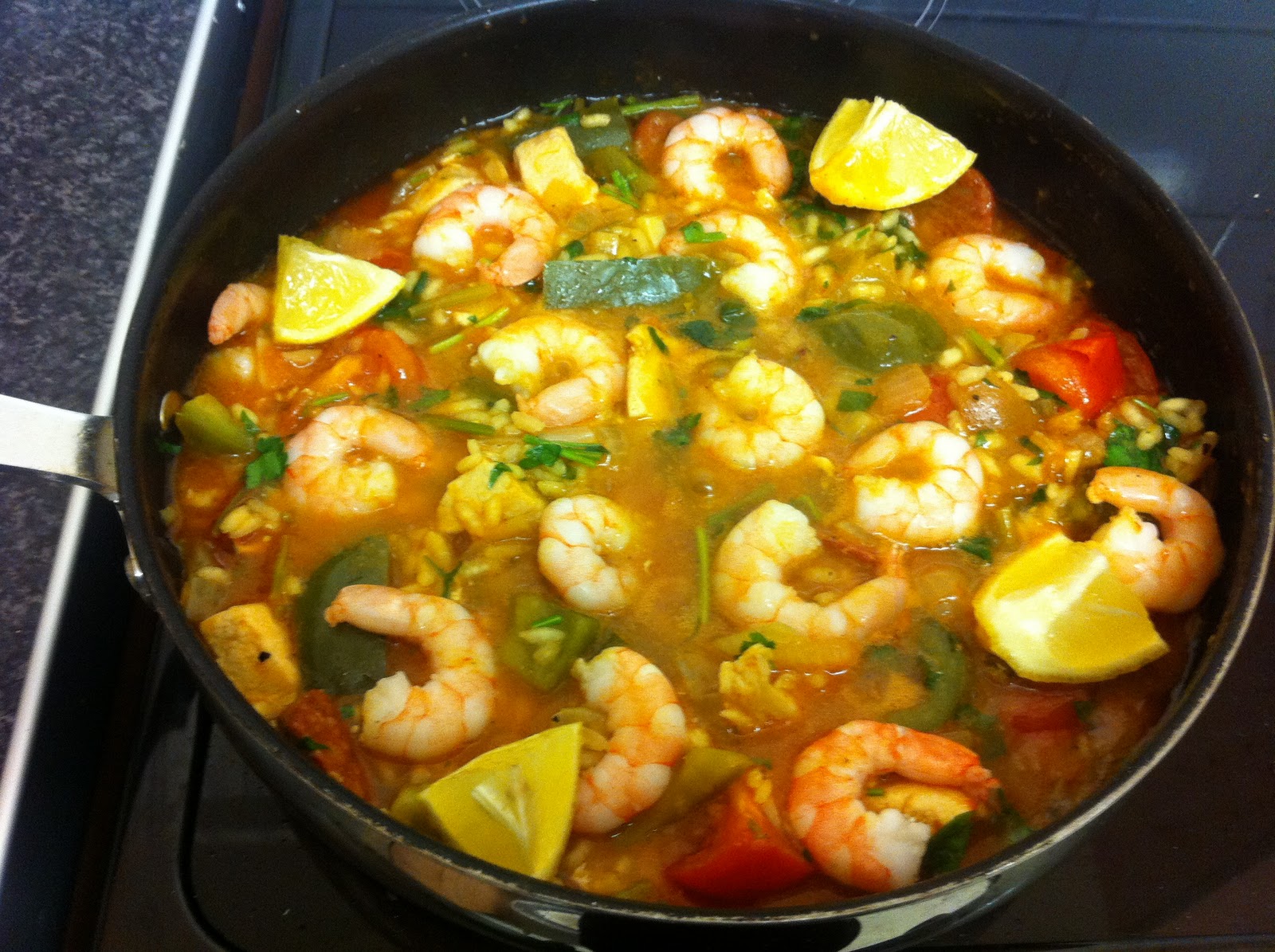
Paella for one

Paella can seem a pretty daunting prospect for one - those fancy paella pans all look big enough to feed an army and the quantities of ingredients tend to be huge. I don't think I've ever seen a recipe for this Spanish standard for fewer than eight people.

I was once lucky enough to be invited to Sunday lunch by a family in Valencia, the city that is the home of paella, and that was exactly what they dished up. Paella is the sort of food that often gets cooked in front of others - indeed, it practically demands show-off cheffery. Isabella was kind enough to let me help her with some of the preparation, which was fun, as she cooked up a storm in front her guests and I picked up some useful tips.

A true paella valenciana has rabbit as the star meat ingredient, plus snails. More commonly, there will be chicken and various types of seafood, and maybe some chorizo because traditionally paella is about using what you have to hand. 

This recipe actually makes two portions, so you can feed a friend or reheat the leftovers next day. Don't be daunted by the long list of ingredients - this is actually very easy. It helps to do all your chopping before you get the pan on.

What you need:
Olive oil
1 small onion, roughly chopped
A clove of garlic, crushed
A small handful of flatleaf parsley
About 6cm of cooking chorizo, sliced into little rounds
A small handful of leftover chicken, shredded
Paella rice, about a third of a coffee mug
1/2 litre of chicken stock
1 small green pepper, deseeded and sliced
2 small tomatoes, cut into quarters
Saffron
A tiny pinch of smoked paprika
2-3 tsp tomato purée
A handful of cooked jumbo prawns
Lemon wedges
Seasoning

What to do:
Heat the oil in a heavy sauteuse over a medium heat. Sauté the onion and garlic. Separate the parsley leaves from the stalks and set the leaves aside. Chop the stems finely and add to the onion, along with the chorizo (and the fresh chicken, if you're using it). Tip the rice in and stir through so it is thoroughly coated in the oil then let it fry gently for a minute or two.

Pour in the stock and stir everything. Add the pepper and tomatoes, a generous pinch of saffron, the tomato purée and a little freshly ground black pepper. Bring to the boil, then turn the heat down to low so the liquid is only just bubbling. Now leave it for 20 minutes, only very occasionally stirring it so the rice doesn't stick to the bottom of the pan.

Chop the parsley leaves finely. Five minutes before the end, stir through half the parsley and the leftover chicken, then tuck the prawns into the top of the paella to heat through. It's ready when the rice is soft and all the stock has been absorbed. Serve it with the rest of the parsley sprinkled on the top and a lemon wedge or two on the side.


Cook's tips:
At a pinch, you can make this almost entirely from store cupboard ingredients, especially if you have a freezer. I keep bags of prawns in my freezer, as well as a bag of mixed seafood - the sort that contains squid, mussels and prawns, all of which can be used in a paella. If you don't have fresh tomatoes, half a tin of chopped tomatoes will do the job - just omit the purée. No peppers? Use sliced frozen ones if you have them, or a couple of peppers from a jar, torn into strips.

Other things you can toss into a paella include other shellfish or seafoods such as baby octopus, pork belly, leftover turkey or game and sliced green beans or broad beans.

If you don't have any leftover chicken use half an uncooked chicken breast.

Risotto rice is an excellent substitute for paella rice.

Sunday, 15 January 2012

Kedgeree

Ever since I learned how to cook it, I've been making kedgeree backwards and it was years before I discovered I'd been doing it wrong. I don't mean that I was following the recipe backward, dear me, no - that would be stupid, if not impossible. What I mean is, I always thought this was a dish for dinner/supper/tea - whatever you call it - so it was a bit of a shock to learn the truth. Kedgeree is a breakfast dish and it's curried.

In my defence, I learned this recipe from my mother - perhaps she couldn't get hold of curry powder when I was a child. Or perhaps she just didn't know it's meant to be for breakfast, although I find that hard to believe as she was an excellent cook. Still, she had the basic ingredients right - smoked fish, rice, onions and egg. I still make it as an evening meal and I still don't add the spices - for me, the smoked haddock is the draw and I don't see the point in burying its flavour. 

What you need:
1 smoked haddock fillet
1 egg
Half a mug of basmati rice
1 onion
Butter


What to do:
Put the rice on to cook, using your preferred method. Meanwhile, boil the egg until it's firm and poach the haddock in a centimetre of water in a lidded sauteuse until it's just cooked (as soon as the water reaches the boil, turn off the heat and let the fish continue to cook in the hot water). 

Heat a generous knob of butter Roughly chop the onion and sauté it gently until it is soft and translucent. Don't let it colour. Meanwhile, flake the smoked haddock and shell the egg then chop it roughly.

When the onion is ready, fold in the rice, fish and egg. Stir through to reheat all the ingredients and serve.

Cook's tips:
I boil rice for 12 minutes, as this is how I was taught - bring a pan of lightly salted water to the boil, add the rice then keep it on a rolling boil until it's cooked. Most people I know say they don't get good results this way - it helps to rinse the rice with a kettleful of boiling water after draining into a sieve. This removes the excess starch and keeps the grains separate and fluffy. I never have any luck with the method my friends use, which is to put the rice into a pan, cover with a measured amount of water, turn on the heat and cover with a very tight-fitting lid until the rice has absorbed all the liquid and is cooked through. American long grain rice is a good substitute if you don't have basmati to hand. Cooking times are roughly the same.

This dish takes a lot of pans - to save on washing up, I often lower my egg into the boiling rice halfway through, so the two are ready at the same time. 

There's an ongoing debate about dyed versus undyed smoked haddock and other fish. The London Fishmonger explains the difference in his blog. Me, I want yellow fish as it provides an essential colour contrast - if that means buying dyed if I can't find naturally yellow smoked haddock then I will, The alternative is the inferior smoked version that is virtually white in colour.

Other kinds of smoked fish work well with this dish.

If you want to have a go at producing Raj-style curried kedgeree, Good Food has an excellent selection of recipes.

Saturday, 24 September 2011

A chicken risotto

I've had one of those weeks where I've done very little cooking - there were a couple of evenings spent in the pub that saw me raiding the fridge for snacks at 11pm after drinking beer on an empty stomach. Then I got ill - too ill to cook - and ended up ordering Chinese takeaway to be delivered one night. And yesterday I just felt too lazy - the curse of the lone cook - and ate a pastrami sandwich and a slab of halloumi while parked on the sofa watching Nigel Slater doing infinitely more interesting things with food than I was.

Foodwise, from a health point of view it was not a great week - I didn't eat nearly enough fruit and veg, despite my best intentions. And drinking generally leads to cravings for fat and salt when the hunger pangs kick in, which is why I was picking at cold cuts and cheese before bedtime.

But before my chaotic week got properly underway, I did actually do some real cooking. I still had some leftover chicken in the fridge from the roast of a few days previously, plus a lovely bowlful of homemade chicken stock that had set to a deep golden, thick jelly. There was only thing on my mind - risotto.

Risotto is one of my favourite comfort foods - it's fairly easy to make although it does require attention (I find the stirring very relaxing as there's a lovely rhythm to it), and it's also a very good way of using up leftovers. This chicken risotto is one I invariably make after roasting a chicken. It's not dissimilar to the classic Venetian risi e bisi, although I don't like my rice quite as sloppy. I've been cooking this so long (decades), I have no idea where my recipe came from originally - most likely, my usual habit of seeing what food I had in the house and slinging it together. The quantities given make one very generous bowlful.

What you need: 
A handful of cooked chicken, torn into strips or chunks
A small onion, finely chopped
About 1/2 litre/1 pint of chicken stock
A glass of white wine or vermouth (optional)
Half a punnet of chestnut mushrooms, halved then sliced
Half a mugful of risotto rice
Half a mugful of defrosted frozen peas
A lump of parmesan cheese, grated
A few chopped sprigs of parsley


What to do:
An hour before you start, take the stock out of the fridge, skim any fat off it and let it come to room temperature to soften the jelly. Heat a little olive oil over a low heat in a heavy based sauteuse and gently fry the onion until it is translucent. Turn up the heat and tip in the rice, stirring it through with a wooden spoon until every grain is coated in the oil and it's "fried" a little. If you're using the wine, now is the time to add it to the pan - it will sizzle alarmingly and create a lot of steam. Stir it furiously with the wooden spoon. No wine? Use a ladleful of the stock.

Turn the heat down to moderate, keep the pan on simmer and keep stirring until all the wine or stock has been absorbed. Then keep adding the stock, a ladleful at a time. And keep stirring - the process helps release the starches from the rice grains to produce that lovely creamy texture. The whole process should take around 20-25 minutes.

About halfway through, add the mushrooms. Don't be scared by how much space they take up in the pan - they will shrink right down as they cook. Five minutes later, add the peas and the chicken. Cook for another five minutes or so, until all the stock has been absorbed and the rice is thickly creamy. Turn off the heat, stir in the grated Parmesan and serve, with the chopped parsley as a garnish.


Cook's tips:
Purists insist the stock should be hot before adding it but I rarely bother to tip it into a saucepan and bring it to the boil. As long as the heat under the sauteuse is just high enough to keep the risotto on simmer, it'll still work just fine. It's important to take the stock out of the fridge though - you do not want to be adding really cold stock to the pan otherwise the temperature of the risotto will fluctuate too much during the cooking. I usually boil a kettle before I start cooking in case I don't have enough stock and also because sometimes the rice may be more absorbent than others.

The rice - it's really important to have the right kind of rice, starchy and capable of absorbing a lot of liquid. The three main Italian risotto rices are Arborio, Carnaroli and Vialone and you can find at least the first two varieties in the supermarkets. Using basmati or American long grain just won't work. Spanish paella rice makes a good substitute if you can't find risotto rice.

The cheese - like the rice, the right kind of cheese is essential. Parmesan is the ideal and easy to find in supermarkets. Do not use those nasty drums of grated Parmesan dust though - the contents both smell and taste like vomit, not the effect you want to achieve. Good substitutes for Parmesan are Grana Padano, which comes from the same region but is a cheaper generic version, much like cheddars, but otherwise almost (not quite!) indistinguishable, or Pecorino, which is made in Sardinia from sheep's milk but has a similar texture.