Showing posts with label herbs. Show all posts

Wednesday, 5 December 2012

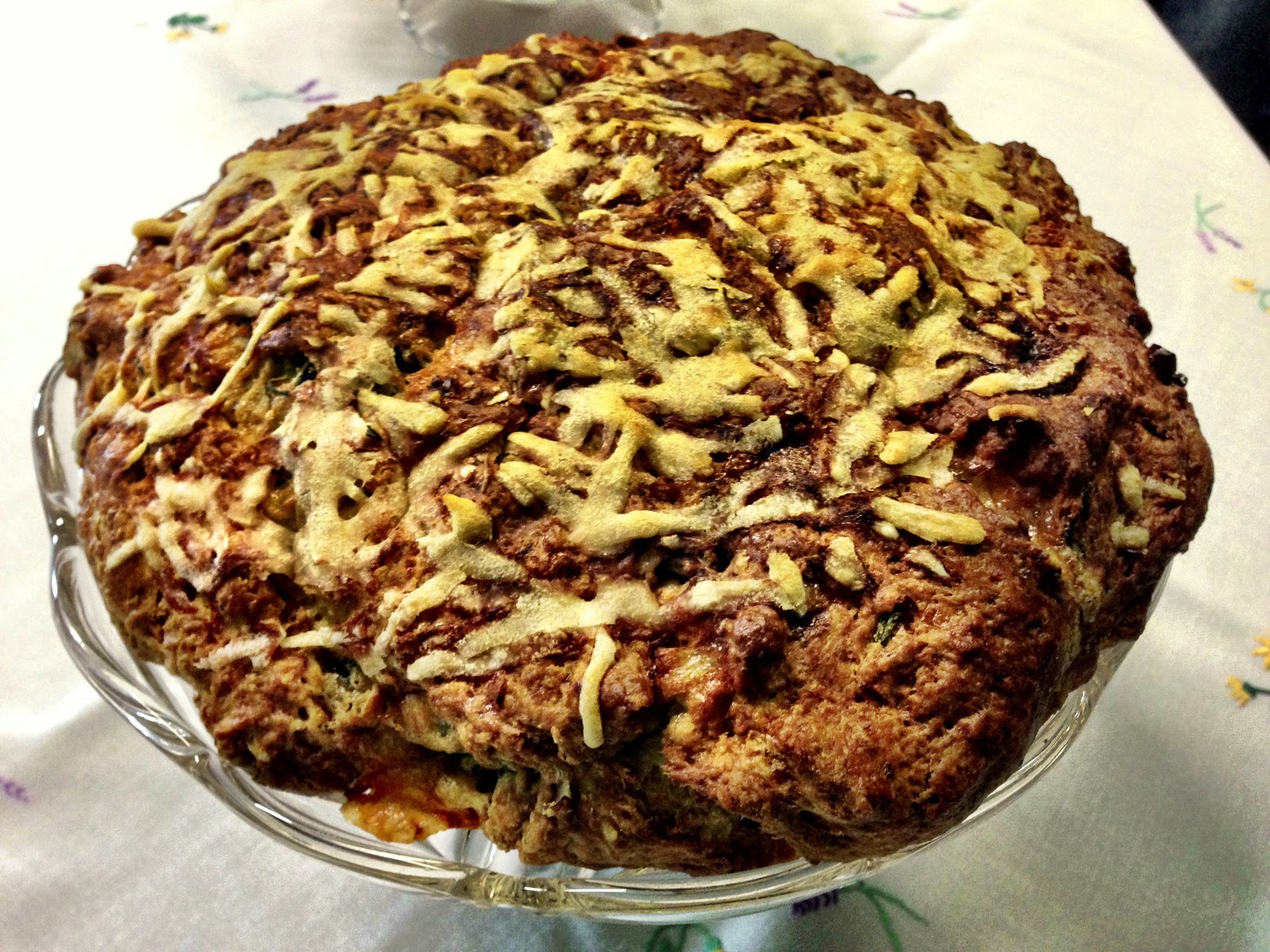
Stilton, rosemary and walnut scone

This almost-cakey slab of savoury carbs is really easy to knock up and the kind of thing I'm likely to bake when I need a supply of snacky stuff to nibble on when I'm working, or as the basis for a lazy supper on a tray in front of the TV.

What you need:
250g self-raising flour
1/2 tsp bicarbonate of soda
45g cold butter, cut into small chunks
150ml milk or soya milk
150g stilton, cut into cubes
A sprig of rosemary, leaves stripped off and very finely chopped
6-8 walnut halves, chopped
Parmesan cheese

What to do:
Heat the oven to 200C.

Sift the flour and baking powder into a large mixing bowl. Rub the butter into the flour with your fingers - it should look like breadcrumbs. Add the milk and work it in gently until it forms dough. If it is too dry to take up all the flour, add a little more milk. If it's too wet sprinkle in a little more flour. Add the cubes of Stilton, walnut pieces and chopped rosemary. Knead the dough so everything is well distributed.

Line a baking sheet with a piece of baking parchment. Put the scone dough on to it, shape it into a round then flatten it very gently. Score the top into eight and grate a little parmesan over it. Bake for 25 minutes or so - it should be risen and golden.
Cook's tips:
Any blue cheese works really well here - try some gorgonzola or bleu d'Auvergne. Blacksticks Blue is especially tasty here but if you're on a budget a Danish blue is just as good.

I like to tinker with the additions - any good melting cheese can replace the blue. I sometimes add some chopped raw bacon or lardons instead of walnuts. A little very finely diced onion adds a good blast of flavour (sprinkle a little on the top too). Chopped fresh thyme or sage can take the place of rosemary. Sliced black olives also work.

I like to make it in a big round as you can break off as much as you want (keep the rest in a tin or wrapped in foil for later) but you could make individual scones with a cookie cutter - adjust the cooking time to 20 minutes then check on them!

The recipe doubles up really easily, just up the cooking time to 30-35 minutes.

Wednesday, 20 June 2012

Griddled sumac lamb with herby lemon peas

As with asparagus, the season for fresh peas and broad is brief so it's good to make the most of them before resorting once more to the useful frozen standbys. I find podding very therapeutic and it's a nice task while listening to the radio or watching TV.

The lamb here is not a million miles from souvlaki except I've not used skewers here. The principle is the same though - marinate then griddle. Peas are naturally sweet so balance well with the tartness of the lemon.

What you need:
150g lamb fillet
1 heaped teaspoon of sumac
1 small shallot, finely chopped
A portion of fresh peas
A generous handful each of flat-leaf parsley and mint
Half a lemon
Half a small preserved lemon
Olive oil
Seasoning

What to do:
Marinate the lamb - cube it, trimming off any excess fat, then put it in a bowl with a couple of tablespoons of olive oil, the juice from the half-lemon and the sumac. Set aside for 30 minutes while you pod the peas.

Sauté the shallot in a small knob of butter until it's soft and translucent. While it's cooking, boil the peas - they need 3-4 minutes depending how big they are. Wash the herbs, pat them dry with kitchen roll and cut the stems off. Chop the leaves, but not too finely.

Heat a cast iron grill pan until it's almost smoking hot.Grill the lamb cubes for 2-3 minutes each side.

Turn the heat right down under the shallots, add the herbs and stir through. Let them wilt for a few minutes then add the peas and finely sliced lemon. Season to taste and keep warm on a low hob until the lamb's ready. 

Make a bed of the peas and place the lamb on top.


Cook's tips: 
As an alternative to oil and lemon juice for the marinade, you could use plain yoghurt mixed with the sumac - its acidity works just as well as lemon in tenderising the meat, while its fat will keep it moist.

Be careful not to overcook the herbs - you want them just wilted and no more.

For a generous portion of peas, you need about 500g or just over 1lb in their pods. I really like the sharp, sour saltiness of preserved lemon but if it's too much for you use the zest of a fresh lemon instead.