Showing posts with label chicken. Show all posts

Thursday, 26 December 2013

Christmas leftovers... some ideas

So, hands up who bought too much food for one? I manage this every year, always with the mindset that friends might drop by or I might have an unexpected dinner guest on Christmas Night who has nowhere else to go. At the moment I'm looking at a large slab of belly pork on a plate in my fridge - some of that will be simply reheated for dinner tonight, accompanied by some of a lovely savoy cabbage I have and the rest of yesterday's roast parsnips.

If you're stuck for ideas, here's a few.
The quick chicken supreme work well with other poultry such as turkey, if you bought a small crown, guinea fowl or duck. And so will my cheat's chicken cacciatore - just make the sauce without the uncooked chicken, then add the cooked meat 10 minutes before the end, so it's thoroughly reheated.

Pie and risotto will take almost any filling - both are a good way to use up whatever leftover meat and vegetables you have to hand. Try my chicken and vegetable pie or chicken risotto.

My recipe for lamb in date and lemon sauce says uncooked lamb, but cooked will be fine - you'll be basically reheating it in the sauce in the oven. You can do the same with my fruity goat tagine - it doesn't have to be goat meat: leftover lamb or chicken will both be fine. A couple of slices of cooked lamb can also substitute for fresh chops in my lamb chops baked in the oven.

Soup is a go-to for Christmas leftovers. My game soup is ideal for leftover partridge, pheasant or other roast birds. My quick winter minestrone is very adaptable - the tomatoes, greens and pasta are the backbone, then just throw whatever else you have to hand in it.

If you have too many root vegetables lurking in your fridge, the winter root veg casserole is tasty and also simple and light after the richer food of Christmas Day.

If you have leftover cheese, you could make yourself a thrifty cheesecake or use some up in a stilton, rosemary and walnut scone.

Don't forget, quite a few of these can also be frozen once made - handy for those days when you don't feel like cooking but can pull something home-cooked from the freezer!

Monday, 22 July 2013

Couscous royale

When I lived in Paris, every Wednesday night without fail Parisian Boy and I went to a nearby Tunisian restaurant to eat couscous with friends. We were often a large group of 10-12 in total and there would be good-natured arguments over what type of couscous to order. Invariably, because couscous is a communal way to eat, we'd settle on couscous royale because the platter of mixed meats offers something for everyone.

When the food arrived, there would be one huge platter of steamed couscous laced with chickpeas, another huge platter of grilled merguez, lamb chops, skewers of grilled beef and chicken pieces, and perhaps other meats, and a huge tureen of vegetable broth. These would be passed round the table, along with the pots of harissa to add some fire to the mix.

Despite having three distinct components, it's fairly quick and easy to make for one. It takes about 30 minutes in total. The couscous grain itself is the most filling component (it can swell up in the stomach!) so start with a small amount on the plate and top up if you're still hungry.

What you need:
2-3 merguez sausages
1-2 small, boned chicken thighs, skin off
Olive oil
1 onion
1 large carrot
1 courgette
2-3 baby aubergines
1 baby turnip
1 small pepper
1.5 tsp ras el hanout
1/2 litre boiling water
Harissa paste
Portion of couscous, about 75g dry weight

What to do:
First make the broth. Peel and quarter the onion, leaving the root intact. Peel the carrot and slice into thick 2cm rounds. Trim the stalks off the baby aubergines. Trim and quarter the baby turnip. Quarter and deseed the pepper. Cut the courgette into very thick 3-4cm rounds. Heat the oil in a deep pan on a medium hob. Add all the vegetables except the courgette and pepper and fry gently for a few minutes. Don't let the veg brown. Add the ras el hanout, stir through and fry for a minute then pour in the boiling water. Bring it just to the boil then turn down the heat and leave it to simmer for 30 minutes. Add the courgette and pepper halfway through.

Cook the meat. Rub the chicken thighs with a little oil and either grill them on the hob in a cast-iron grill pan or cook them under the grill of your oven. They need about 15 minutes. Turn halfway through. Grill the merguez for 10 minutes in the same pan, turning halfway through. Turn off the heat when cooked and keep warm.

Make the couscous. Boil the kettle again. Tip the dry couscous into a heatproof bowl and pour over just enough boiling water to cover it. Cover the bowl with a plate and leave it for 5 minutes to swell then fluff it up with a fork.

To dish up, pile the couscous into one side of a deep soup plate. Use a slotted spoon to take out the vegetables and pile them on the other side of the plate. Fill a ladle with the broth and stir in about 1/2 tsp of the harissa, then pour it over the veg. Pile the meat on top.
Cook's tips:
Harissa and ras el hanout are widely available in supermarkets. Finding merguez - a fresh, lamb-based, long and skinny sausage flavoured with paprika and harissa - is a little trickier. They sometimes turn up in the meat section in supermarkets, mainly in the summer barbecue season. I always buy them when I spot them, freezing the spare packs for later. You can buy them online too. If you can't get hold of any, grill a couple of small lamb chops instead.

Be flexible with the vegetables. It's traditional to use what's in season, so that could include chunks of squash, broad beans or green beans (haricots verts). If you are very hungry, you can add a spoonful of cooked chickpeas to the couscous grains (use the rest of the tin to make hummus).

If you have leftover couscous, you can use it up as the basis of a tabbouleh salad. I like to whiz any leftover vegetable broth in a blender to make a spicy and filling soup.

Friday, 24 May 2013

Spicy stir-fried rice

It's quite hard to cook one portion of rice for a meal and it hardly seems worth it - cooking two portions so you have leftovers is much smarter. And leftover rice is the basis of a plate of stir-fried rice - the secret to making it properly is to use cooked rice that has been chilled as when it's straight out of the cooking pan it's too warm and damp to get a good result.

This dish doesn't have to be Chinese in style - I don't own a wok and if I'm going to scramble an egg it'll be for my breakfast rather than for this. I take my inspiration instead from spicy rice dishes such as nasi goreng or kedgeree. As well as using up rice, I take the opportunity to clear out my fridge to use up some veg. Then all I need is some spice paste of some sort.

This is quick - just 5 minutes to prepare and 5-10 in the pan.

What you need: 
1 portion of leftover cooked rice, chilled
1 small chicken fillet, cut into bite-size pieces
2 spring onions, sliced 
1 small carrot, cut into julienne strips
A handful of peas
Oil
Curry paste of some sort, about a tablespoon
1 egg (optional)

What to do:
Prepare the veg and chicken. Heat about 2tbsp vegetable oil in a wok or sauteuse and get it very hot. Toss in the chicken and stir-fry it for 4-5 minutes then add all the veg and fry for another 2 minutes. Stir in a generous tablespoon of curry paste and fry for another minute. Lastly, add the rice - break up any lumps and fry it for a good 3-4 minutes so it's thoroughly reheated and all the chicken pieces and veg are evenly distributed through it.

If you're very hungry, top it with a fried egg Indonesian style - well-cooked rather than soft.

Cook's tips:
The chicken doesn't have to be fresh - frying off some leftover cooked chicken or diced lamb works fine, or use cooked prawns. Likewise, the veg are flexible - use diced pepper, sweetcorn, mushrooms or edamame beans, whatever you have to hand.

Cooked rice needs to be handled with care as it's possible to get bacillus cereus food poisoning from it. Chill it quickly after cooking, put it in a bowl and store it in the fridge. And be sure to reheat it thoroughly to kill off any toxins.

Which curry paste? If you're using an Indian one, go for mild rather than fiercely hot. I made this one with some rending paste. If you can find it, nasi goreng paste is the clear winner, but Thai curry paste also works - I use less than a tablespoon of the red sort and avoid the searing heat of the green.

Thursday, 13 December 2012

Book review: Quick and Easy Indian Cookbook

It's very rare for me to cook curry at home, as I've said before. So when I was asked to try out the Quick and Easy Indian Cookbook by the Three Sisters, I took as a good opportunity to increase my somewhat basic knowledge.

Despite the title, prepping the various spice mixes was time-consuming. The ginger and garlic paste used in many recipes took me half an hour to make, most of that peeling the garlic cloves. However, it made a generous quantity that can be kept in the fridge or frozen in ice trays and it's the kind of thing I would use for non-Indian dishes too, so I didn't mind. Likewise, toasting and grinding spices before the cooking could begin - I spent 30 minutes preparing the chaat masala spice mix (which is used in many of the book's other dishes). The recipes themselves were mostly fairly straightforward once everything was prepped, although a major challenge for me was working out how to cut down recipes intended for 4 or 6 people into 1 or 2 portions.

I was wary of the chopped green chilli in the Cumin Chicken as I don't like fierce heat, but I needn't have worried. The finished dish was warm and fragrant rather than searing although mine looked rather wetter than the book's photo of it. I made a little tomato and cucumber raita to go with it (not in the book).

The book gives a recipe for making paneer but my kitchen doesn't have the space for setting cheese curds aside to drain so I bought some from an Asian supermarket and cooked two recipes. The shahi paneer, or royal Indian cheese, was a fragrant tomatoey casserole that turned the paneer into very soft curds. The shallow-fried paneer chaat really was quick and easy. I will definitely make both these again.


The gosht boti (lamb chops with tomato) were a disappointment, tasting very bland despite the large number of spices. The instructions were also a baffling mess - during the browning of the meat it says to boil off the water, except the water gets added much later.
The Goan fish curry, which I made with king prawns, really hit the mark. Packed with ginger, garlic and chilli and softened with the coconut milk, it soothed the cold I was suffering from. Despite the long list of ingredients, it was simple to assemble and tasted amazing. And it was easy enough that I'd feel confident cooking it without the book on front of me.

All in all, it's definitely a book I'd cook from again especially if I had guests. A big downside is that too many recipes need you to toast whole spices then grind them as part of the cooking rather than something you can do ahead in quantity - that belies the claim of quickness. I've still got a few bookmarked recipes to try and of the five above, I'd make all of them again except the lamb chops. 

Monday, 5 November 2012

Chicken and vegetable pie

Own up - who doesn't love pie? I do. I was invited to a pie-tasting event the other week. I hadn't eaten pie of any sort for some time and as I tucked in to a truly delicious peppered steak pasty I realised I hadn't made pie at home since, ooh I don't know when.

Homemade pie is definitely a bit of work and for one person, even more so. But once in a while it's worth making the effort, because it will feed you several times over and if you have leftovers it's a good way to use them up. Have one portion hot and enjoy the rest for packed lunches (although it reheats well too).

As it happens, I'd just been given a very large (2kg) organic chicken. I roasted it for a weekend supper then spent the next day pulling the rest of the meat off the carcass, which I turned into stock the bones. I also had a leek that was on the verge of going slightly limp. Pie sprang to mind - chicken and leek are made for each other.

What you need:
Half a leftover roast chicken - 1 breast, 1 leg
A small leek, diced
1 carrot, diced
Handful of frozen peas
Seasoning
250g shortcrust pastry
Bechamel sauce
1 egg

What to do:
Make the pastry first. Rub 110g butter into 225g of plain flour until it resembles fine breadcrumbs. Add a tablespoon of cold water and, using one hand, work it in to a dough. Add more cold water bit by bit if you need it. The pastry should be stiff, not sticky. Wrap it in cling film and put in the fridge to rest for at least half an hour.

Make the filling. Sweat the leek in some butter until it starts to soften. Add the carrot and continue to cook gently. Throw in the peas. Cut the cooked chicken into bite-sized chunks and add to the veg. Stir well and season lightly. Set aside to cool.

Make the bechamel. Melt 50g butter in a pan on a low heat and add a tablespoon of plain flour. Stir with a wooden spoon to get rid of any lumps. Add 300ml milk a tablespoonful at a time, beating furiously each time to prevent lumps. Turn up the heat and keep stirring as it thickens.Turn the heat down again when it starts to bubble and cook it for a few minutes more (this is to cook the flour as it's not nice raw). Pour into the chicken and veg and mix well.

Heat the oven to 200C and grease a 20cm pie dish.

Take the pastry out of the fridge and cut it in half. Sprinkle a little flour over the worktop and roll out half the pastry into a circle until it's about 1mm thick and about 1.5cm bigger than the pie tin. Line the pie tin across the base and up the sides, making sure you have an overhang. Tip in the filling, spreading it evenly across the dish. Roll out the rest of the pastry to make the lid. Make an eggwash by beating a small egg in a mug. With a pastry brush, smear a little eggwash round the edge of the pie, roll the lid on top and crimp the edges together. Brush the rest of the eggwash across the pie lid and then cut 2-3 slits in it. Bake for 40-45 minutes until the top is golden and crispy.

Cook's tips: 
Pastry: the trick to good pastry is keeping everything cold. Use butter straight from the fridge (rubbing in is easier if you cut it into cubes) and keep your hands cold. I wash mine under the cold tap at this stage and also when rolling out. Chilling the pastry before rolling is essential - it stops it shrinking from the sides of the dish as it bakes. No rolling pin? Improvise - last night's wine bottle (a trick I learned in my student days) will be fine. Of course, if you're feeling lazy, there's nothing wrong with using bought shortcrust pastry. You can even buy it in ready-rolled sheets now.

You shouldn't have any leftover pastry from this quantity and a 20cm dish, but if you do use it to make jam tarts. Or a mini pasty if you have leftover filling too.

Bechamel: Yes, you can buy it in a jar but homemade doesn't take very long and it has only 3 ingredients, which is a lot fewer than the readymade version. Quite a few well-known chefs advocate putting the butter, milk and flour together in the pan at the very start and whisking everything furiously as it comes to the boil. Done properly, it should be lump-free.

The filling: Most cooked leftover meat will lend itself well to pie filling. Add some chopped bacon if you don't have quite enough meat. For the veg, mushrooms also have an affinity with chicken but you could use anything - sweetcorn, chopped onion, diced peppers, broad beans... If you have some fresh herbs, a little thyme, tarragon or parsley will lift the filling.

Preparing leeks: the quickest, easiest way to dice a leek is a complete no-brainer when you know how - it's just not immediately obvious to non-chefs. I spent years slicing leeks into rounds then cutting those into quarters before a chef taught me differently. Pull off the outer leaves and trim off the top. Leave the root intact. Put the leek on a chopping board and slice it vertically from root to tip, turning it to make a fresh cut every 1/2cm. Then slice it horizontally and it will fall into dice. Wash well in a colander to get rid of any grit.

Wednesday, 31 October 2012

South-east Asia in a bag

The #foodiepenpals “club” never ceases to thrill, surprise and amaze me – although I cook for one day to day, food for me is also about sharing and that’s where #foodiepenpals just keeps delivering. I love putting a parcel together every month for the recipient I’ve been matched with and there’s also the anticipation of getting one in return from yet someone else.

There was extra excitement in store this month, as my parcel not only arrived hand-delivered but was also entirely homemade. Lex, aka LadyNom1, was passing through my neighbourhood so she dropped by for tea and a natter, while handing over this exotic-looking bag.


Lex writes the LadyNom blog and runs a supper club called Nomsensical in Altrincham, just south of Manchester. There are several supper clubs in my city although I’ve yet to attend one. We had a chat about these and she encouraged me to sign up for her next one. I then told Lex about Manchester’s legendary GastroClub, which she’d never tried yet. It’s currently on hold but hopefully she’ll book when it gets going again.

After she left, I dived into Lex’s bag of goodies, which contained four jars of handmade fresh dips and pastes from south-east Asia. She certainly knows her stuff, having travelled extensively in the region and cooked professionally there so these were all as authentic as can be. She’d very thoughtfully made up each jar in one-person portions for me – Cambodian amok curry paste, a Laotian spice paste for fish and noodles, a Vietnamese dipping sauce and a Thai curry paste.

She’d also included six (six!) pages of info about her travels and the food, plus a recipe for each item, also thoughtfully in one-person portions. Most of my repertoire is pan-European so I was delighted to receive such a fabulous parcel and couldn’t wait to get cracking in the kitchen.

I chose to cook the Cambodian amok first – you’ll have to ask Lex for the recipe, but it’s a mix of chicken and spinach or beet leaves steamed in coconut milk and her spice paste, which is based on coriander. For true authenticity, you’re supposed to wrap it in a banana leaf but I used her suggested method of steaming it in a bowl over a pan of boiling water instead. It was fragrant and warming, the perfect supper for a chilly, drizzle evening.


Saturday, 27 October 2012

Chicken and banana curry

I have a very lazy relationship with curry. I either go out to eat it, or I order in a takeaway - both on the basis that it'll be far superior to my own efforts. I have a jar of balti paste in the cupboard for when I do decide to rustle up a curry of my own, particularly if I have ripe tomatoes that need eating. And once in a while I make this.

Years ago my parents used to make a chicken and banana curry from a recipe book, but it wasn't particularly tasty as it used a standard curry powder blend. Despite my laziness, I did learn a bit about curry spices some years back and I'm confident that this is an upmarket recreation of that dish from my teens. If you can be bothered it's well worth experimenting - whole spices vastly improve a curry, but South Asians already know that!

I like the combination of chicken and banana as I'm not keen on very hot curries - this produces something milder, slightly sweet and more aromatic. It's not quick - you need about an hour from start to finish, but for soothing, warming comfort food it's hard to beat. Makes 2 portions, on the grounds that curry often tastes better the day after.

What you need: 
Vegetable oil
2 skinless chicken thighs
An inch of cinnamon stick
1/4 tsp mustard seeds
6 cardamon pods, lightly crushed
6 crushed black peppercorns
1/2 tsp turmeric
2 cloves of garlic, crushed
an inch of fresh ginger, grated
1 small onion, diced
1/2 pint chicken stock
1 small green pepper, sliced
2 medium ripe bananas, thickly sliced
A handful of roughly chopped fresh coriander

What to do: 
Prep all the spices first and chop the vegetables. Heat a splash of vegetable oil in a sauteuse on a medium hob and brown the chicken thighs. Set aside, add a little more oil if the pan looks dry then fry the whole spices until they release their aromas.

Add the ginger, garlic and onion and fry until the onion starts to soften - about 5 minutes. Pour the chicken stock in, then add the chicken thighs, banana and green pepper. Stir well and turn up the heat until it starts to bubble gently. Then turn the heat back down, put a lid on, and leave to simmer gently for about 45 minutes.

Plate up - sprinkle the chopped coriander over the curry and add a portion of basmati rice on the side.

Cook's tips:
This works just as well with chicken fillet - if you're in a hurry, it'll cook in about 30 minutes.

Don't use bananas that are very ripe else they will break down completely and you want to have some texture from the fruit even while it's melted into the sauce. And don't swap the green pepper for red or yellow - it will make the curry too sweet. If you prefer more heat, substitute a fresh green chilli, finely chopped, for the mustard seeds.

You can turn this into a korma by using half stock and half coconut milk, plus a tablespoon of ground almonds and a few sultanas.

Monday, 6 August 2012

Cheat's chicken cacciatore

This Italian classic of chicken baked with tomatoes and olives is a perennial on restaurant menus and it's not hard to see why - the chicken and tomatoes are reassuringly familiar while the olives add a touch of exotic. The full-on version involves baking chicken joints on the bone in the oven for an hour and a half to extract their full flavour, then enriching the sauce with mascarpone. Great if you're eating out or cooking for your friends. Not so practical for one.

A stove-top version for one can easily be rustled up within half an hour. And it's a good storecupboard standby as most of the ingredients are the sort of thing you'll have in the fridge and larder.

What you need: 
1 chicken breast, skin off
1 small onion, finely chopped
1 clove of garlic, crushed
Olive oil
1/2 tin of tomatoes, or fresh equivalent (quartered)
Glass of red wine (optional)
1 tsp tomato purée
Half a dozen black olives
1 dessert spoonful half-fat crème fraiche
Pinch of rosemary 

What to do:
Heat a little oil in a sauteuse and fry the onion and garlic gently in the oil until soft and translucent. Cut the chicken into bite-size pieces and add to the pan. Turn the heat up a notch and fry it for a couple of minutes until it takes a little colour on. Add the tomatoes, the purée, the olives and the wine, plus the rosemary. Put a lid on and let it simmer for 20 minutes or so.

Stir through the crème fraiche and warm it for 2 minutes, then dish up with some cannellini beans

Cook's tips: 
You can use yoghurt instead of crème fraiche - just stir it through at the very end and don't cook it else it risks curdling.

For the cannellini beans, use a half-size tin - rinse them well under the tap, then heat gently in a saucepan with a dribble of olive oil, a dribble of water and some seasoning.

This dish also goes really well with rice or roasted potatoes, the traditional accompaniment in its home country.

Monday, 30 April 2012

Quick chicken supreme

My abiding memory of chicken supreme as a child is of the tinned variety - an unappealing glop of unidentifiable bits of poultry slathered in a white sauce akin to a well-known brand of chicken soup. Bland, unattractive and definitely unappetising.

The full-on version, while not necessarily complicated, is time-consuming to make - at the very least it involves making a white sauce from a roux and some versions have you simmering carrots in white wine for an hour to create a stock and then poach the chicken in it.

I'm not convinced it needs to be so difficult, especially when it's a great way to use up leftover chicken. This is ready within 15 minutes, perfect for a quick Sunday supper to eat off your lap in front of the TV. 

What you need: 
1 leftover chicken breast
1 small onion, chopped
2 generously heaped dessertspoons half-fat crème fraiche
Small handful fresh parsley
Butter
Seasoning

What to do:
Using a heavy sauteuse, sauté the onion in a little butter over a low to medium heat until it turns translucent and just starts to colour. While it's cooking, skin the chicken breast and cut into bite-sized chunks. Chop the parsley very finely. When the onions are ready, add the chicken and stir through the crème fraiche. Make sure everything is well mixed then add the parsley, season to taste and stir through again. Let it cook for 5 minutes or so until the chicken is fully reheated then plate up!

Cook's tips: 
I find it really helps to take the chicken out of the fridge half an hour beforehand, so it has time to come to room temperature, because it will reheat a lot faster.

For some bizarre reason, chicken supreme is traditionally served on a bed of white rice. To my mind this simply adds to its reputation for blandness. And I associate white food with convalescence, precisely because it's usually bland and thus unlikely to upset the tummy. Here, I simply sautéed some leftover potato from the evening before's roast for the carbs, and steamed some green beans to go on the side. You could team the supreme with fried wedges of polenta or some sweet potato mash.

Seasoning is critical for chicken supreme. Starting with a decent chicken helps (my butcher sold me a a very tasty small corn-fed bird at the weekend). But packing flavour into the sauce is what makes it. Plenty of black pepper, plus salt to taste and then whatever grabs you - substitute tarragon or dill for the parsley, sauté some garlic in with the onion, finish it with a tiny squeeze of fresh lemon juice...

Friday, 3 February 2012

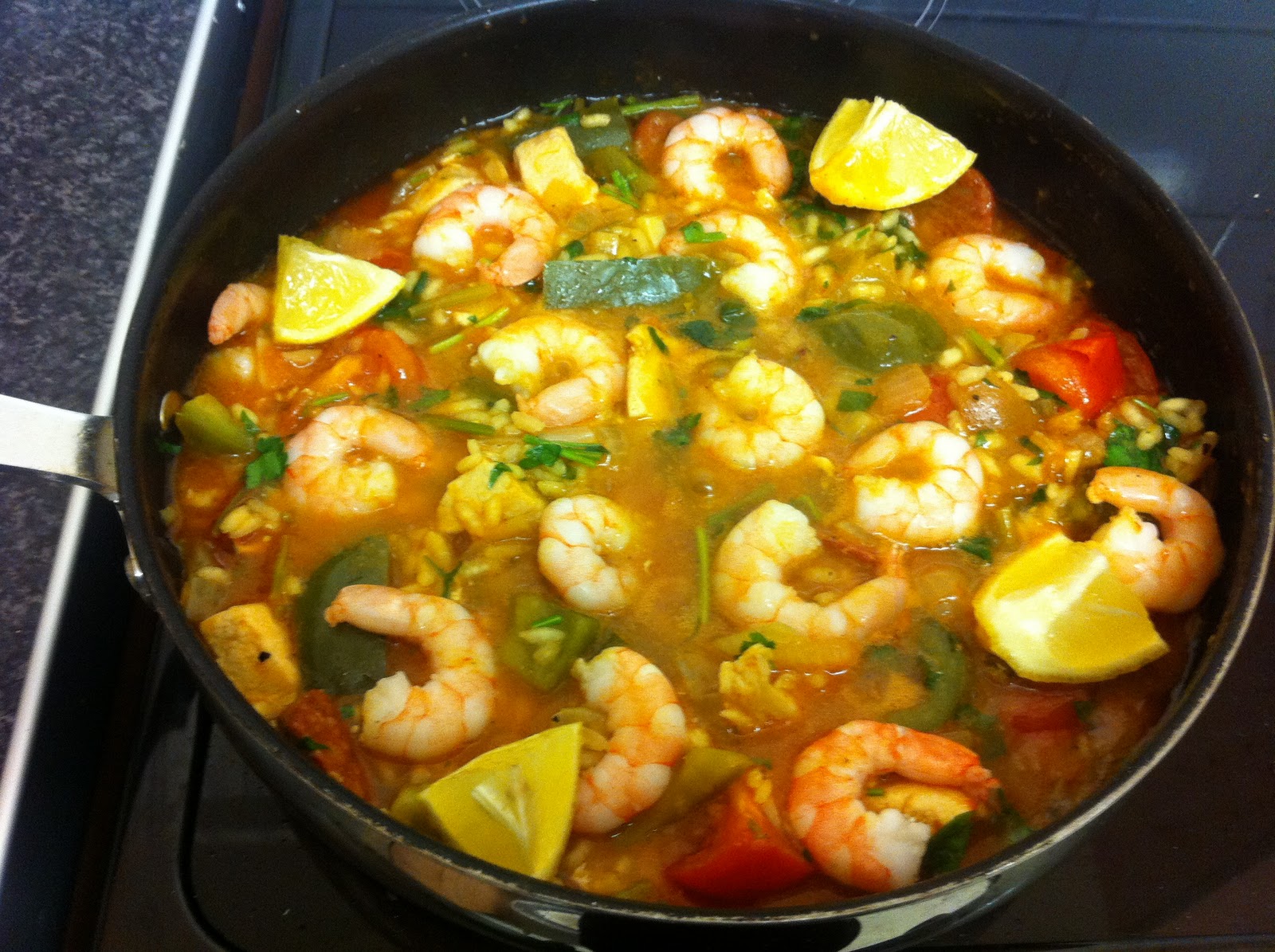
Paella for one

Paella can seem a pretty daunting prospect for one - those fancy paella pans all look big enough to feed an army and the quantities of ingredients tend to be huge. I don't think I've ever seen a recipe for this Spanish standard for fewer than eight people.

I was once lucky enough to be invited to Sunday lunch by a family in Valencia, the city that is the home of paella, and that was exactly what they dished up. Paella is the sort of food that often gets cooked in front of others - indeed, it practically demands show-off cheffery. Isabella was kind enough to let me help her with some of the preparation, which was fun, as she cooked up a storm in front her guests and I picked up some useful tips.

A true paella valenciana has rabbit as the star meat ingredient, plus snails. More commonly, there will be chicken and various types of seafood, and maybe some chorizo because traditionally paella is about using what you have to hand. 

This recipe actually makes two portions, so you can feed a friend or reheat the leftovers next day. Don't be daunted by the long list of ingredients - this is actually very easy. It helps to do all your chopping before you get the pan on.

What you need:
Olive oil
1 small onion, roughly chopped
A clove of garlic, crushed
A small handful of flatleaf parsley
About 6cm of cooking chorizo, sliced into little rounds
A small handful of leftover chicken, shredded
Paella rice, about a third of a coffee mug
1/2 litre of chicken stock
1 small green pepper, deseeded and sliced
2 small tomatoes, cut into quarters
Saffron
A tiny pinch of smoked paprika
2-3 tsp tomato purée
A handful of cooked jumbo prawns
Lemon wedges
Seasoning

What to do:
Heat the oil in a heavy sauteuse over a medium heat. Sauté the onion and garlic. Separate the parsley leaves from the stalks and set the leaves aside. Chop the stems finely and add to the onion, along with the chorizo (and the fresh chicken, if you're using it). Tip the rice in and stir through so it is thoroughly coated in the oil then let it fry gently for a minute or two.

Pour in the stock and stir everything. Add the pepper and tomatoes, a generous pinch of saffron, the tomato purée and a little freshly ground black pepper. Bring to the boil, then turn the heat down to low so the liquid is only just bubbling. Now leave it for 20 minutes, only very occasionally stirring it so the rice doesn't stick to the bottom of the pan.

Chop the parsley leaves finely. Five minutes before the end, stir through half the parsley and the leftover chicken, then tuck the prawns into the top of the paella to heat through. It's ready when the rice is soft and all the stock has been absorbed. Serve it with the rest of the parsley sprinkled on the top and a lemon wedge or two on the side.


Cook's tips:
At a pinch, you can make this almost entirely from store cupboard ingredients, especially if you have a freezer. I keep bags of prawns in my freezer, as well as a bag of mixed seafood - the sort that contains squid, mussels and prawns, all of which can be used in a paella. If you don't have fresh tomatoes, half a tin of chopped tomatoes will do the job - just omit the purée. No peppers? Use sliced frozen ones if you have them, or a couple of peppers from a jar, torn into strips.

Other things you can toss into a paella include other shellfish or seafoods such as baby octopus, pork belly, leftover turkey or game and sliced green beans or broad beans.

If you don't have any leftover chicken use half an uncooked chicken breast.

Risotto rice is an excellent substitute for paella rice.

Thursday, 20 October 2011

Baharat chicken with roasted aubergines

I'm a big fan of just chucking ingredients into a roasting tin and seeing what happens. Partly because I like roasts and as someone who lives alone, it's a good substitute for a Sunday roast with everyone gathered round the table. But also because if you have the time to cook something for an hour, it's a very simple way to cook - once you've prepped everything you have a spare hour to spend on other things while your home fills with cooking fragrances. I'm fortunate that working from home means I can cook this way on a week night - if I were a commuter arriving home starving at the end of a long day, I'd almost certainly want something on the table within half an hour.

This dish is so ridiculously simple, and tasty, that there's almost nothing to do once it's in the oven apart from check it occasionally.


What you need: 
A couple of small chicken joints (thighs or drumsticks)
2 shallots
1 bell pepper deseeded and quartered
A handful of baby aubergines
Olive oil
Baharat
1/2 lemon (optional)

What to do:
Heat the oven to 190C. In a roasting tin coat the chicken, peeled shallots, pepper and aubergines in the olive oil and mix well. Sprinkle over a light dusting of baharat. Pop in the oven for about an hour. Halfway through, turn the ingredients over to brown them evenly.


Cook's tips:
Baharat is a wonderfully fragrant spice mix used across the Middle East. The ingredients can vary but it usually contains coriander, cloves, cinnamon, black pepper, cumin and cardamom. Sometimes it will also have nutmeg, chilli or cayenne pepper. You can find it in some supermarkets or ethnic grocers. Beware - it can be pungent and strong so go easy with it until you've got used to cooking with it. If you can't find it, the Moroccan ras el hanout is easier to find in the shops and makes a good, slightly less hot substitute.

Baby aubergines are easiest and cheapest to find in an ethnic greengrocer's. The flavour, in my opinion, is more concentrated than in the full-size variety, and roasting them whole or halved is a really delicious way to appreciate their taste. The skins will crisp up somewhat, while the flesh inside will melt into a creamy mush. If you opt for the larger type, one medium one will be plenty - cut it into generous chunks and go easy on the oil as aubergines will soak up everything you throw at them.

I often add a couple of lemon quarters to this kind of roasted dish because I like the tartness, but roasting lemons also brings out a concentrated sweetness that goes well with most kinds of meat and the kind of Mediterranean vegetables I like to use.

Saturday, 17 September 2011

Stocking up

If I've roasted a chicken I like to get my money's worth out of it, especially if I've shelled out a tenner for an organic bird. Nothing gets wasted. Nothing.

I count on getting 4 meals out of a 1kg chicken. That's a portion of hot roast meat, plus plenty of leftovers to do interesting things with (more on that another day). And then there's the carcass.

For me, a chicken is always good value for money not just because of the number of meals I can make for myself but because I get to make real stock. Forget stock cubes - they are nasty, mass-produced lumps of grit that when dissolved produce a bland but over-salty liquid. The only bought stock in my larder is Marigold vegetable bouillon, which is very good quality. But for meat stock, it must be home-made.

Home-made chicken stock is both sublime and versatile. Properly brewed, it makes a flavoursome base for soups, risottos, stews and casseroles.

What you need: 
A chicken carcass
Herbs
Assorted vegetables
A big pan
Water


What to do:
Strip the carcass of all the leftover meat and store it in the fridge. Boil a kettle full of water and then get some heat on the hob - put the roasting tin on and pour in a little boiling water, then stir and scrape with a wooden spatula to salvage all the leftover roasting juices and crusty bits from the bird. Pour carefully into the pan. Add the carcass - I usually stuff mine with lemon, garlic and shallots and these all go in the pan with the bones. A couple of bay leaves should join the mix. Depending what else I have in the house, I'll add a quartered onion, a carrot and a celery stalk, and possibly some fresh parsley. Add the rest of the hot water from the kettle and bring the pan to the boil.

What happens next depends on the pan you use. I like to use my pressure cooker as the intensity of the cooking process squeezes every last drop of goodness out of the ingredients - the bones especially will yield all their marrow this way. An hour in a pressure cooker should be enough. If you're using a regular pan, you'll need to keep it on a low simmer once it's come to the boil and put a tight-fitting lid on.This method needs at least 2 hours, preferably 3, and you'll need to check the water level regularly and top up if necessary - you don't want your stock boiling dry. Don't add too much water though - you want a stock rich enough to set to a jelly when cooled, not a dilute, watery one.

When it's ready, turn off the heat and strain through a sieve into a heatproof bowl or jug and let it cool.


Cook's tips: 
You should have about a litre or so of stock - depending on your plans for it, you might want to freeze half. Otherwise put it in the fridge, where it should set to a thick jelly and keep for about 3-4 days.

You can add pretty much whatever raw ingredients you want to the stock before you start cooking. An onion and a bay leaf is the bare minimum to accompany the bones but don't add too many different things - you want the stock to taste of chicken, enhanced with the herbs, onion and a couple of other veg, not overwhelmed by the entire contents of your larder. Be careful about over-seasoning it, particularly if you add the skin from the chicken (unlikely in my house as I love the roasted skin - it's the best bit, in my opinion).

Thursday, 15 September 2011

A roast chicken, French style

As I have previously mentioned, I'm rather fond of a roast but they are not usually a practical option if you live on your tod. As it happens, though, not only is roast chicken in my top 10 favourite meals, it's also the one that's worth making for yourself because the leftovers provide extra meals and you get a carcass to make stock with.

A small chicken weighing about a kilo is about the right size for one. If I can, I'll buy an organic bird, but even a non-organic free range chicken is preferable to a battery one. Most organic chickens tend to be on the large side because they are slaughtered later and thus have had more chance to grow into adulthood. They are undoubtedly the best for flavour so if you can find a smallish one buy it - the extra cost is well worth it for the taste.

I was briefly married to a Parisian many years ago - his mother was a fiercesome woman on first acquaintance but as I got to know her I discovered she was, in fact, a very warm-hearted soul and I became rather fond of her. She was also an absolutely amazing cook. Parisian Boy and I went often to the south suburbs for Sunday lunch with my in-laws, an occasion I always looked forward to knowing that my MiL would dish up some stunning grub - roast capon was a regular on her menu, for example. Once we'd become friends, and I was allowed to say tu to her, she passed on many recipes to me. These she would write down in that standard italic script taught to all French schoolchildren because the recipes were all in her head, passed on by her Auvergne forebears. If I was very lucky (not often), I'd be allowed to watch her in her kitchen.

So, the chicken. The typical British style of preparing a chicken for roasting is to smear it with softened butter and then fill the cavity with seasoning and stuffing. My former MiL's version is rather different and will pack even the blandest of birds with plenty of flavour.


What you need: 
A small chicken, about 1kg
Olive oil
Sea salt and black pepper
A quarter-lemon
1 shallot
2 cloves of garlic
A large bayleaf
Herbes de Provence


What to do:
Heat the oven to 190C. Cut off any trussing string from the chicken and remove any fat from the cavity. Peel the shallot and garlic, then stuff the cavity with these, the lemon quarter and the bayleaf. Oil the chicken outside with the olive oil - be generous with it. Grind some sea salt and black pepper over it then sprinkle liberally with the herbes de Provence. Chicken generally needs about 20 minutes per 500g, plus 20 minutes, but I often give it 30 minutes instead, turning the oven up to 200C for the last stretch as it crisps up the skin nicely. Don't forget to baste regularly.


Stay tuned for ideas for the leftovers and how to make stock.

Cook's tips:
I don't usually bother to make real gravy just for me - it's a lot of faff for one person. If I have a gravy craving I'll cheat with Bisto, making just enough in a coffee mug. Otherwise I'll have a dollop of onion marmalade on the side.

Proper herbes de Provence contain lavender, which is widely eaten in France. The fields of Provence are full of lavender, mainly grown for the perfume industry in Grasse, but much of it finds its way into sweets, ice-cream, chocolate and the herbal blend for which this province is famous. Supermarket blends routinely miss out the lavender. It's worth tracking down a supplier that sells an authentic mix, or to buy the separate ingredients from a herbalist and blend your own. The lavender should be about 10% of the whole.

To serve, I'll either have some greens such as kale or spring greens sautéed over a low heat for an hour, or I'll fill a second roasting tin with some potatoes, onion and peppers, and maybe some parsnip or carrot, toss them in olive oil and put them alongside the chicken for an hour.